


Description
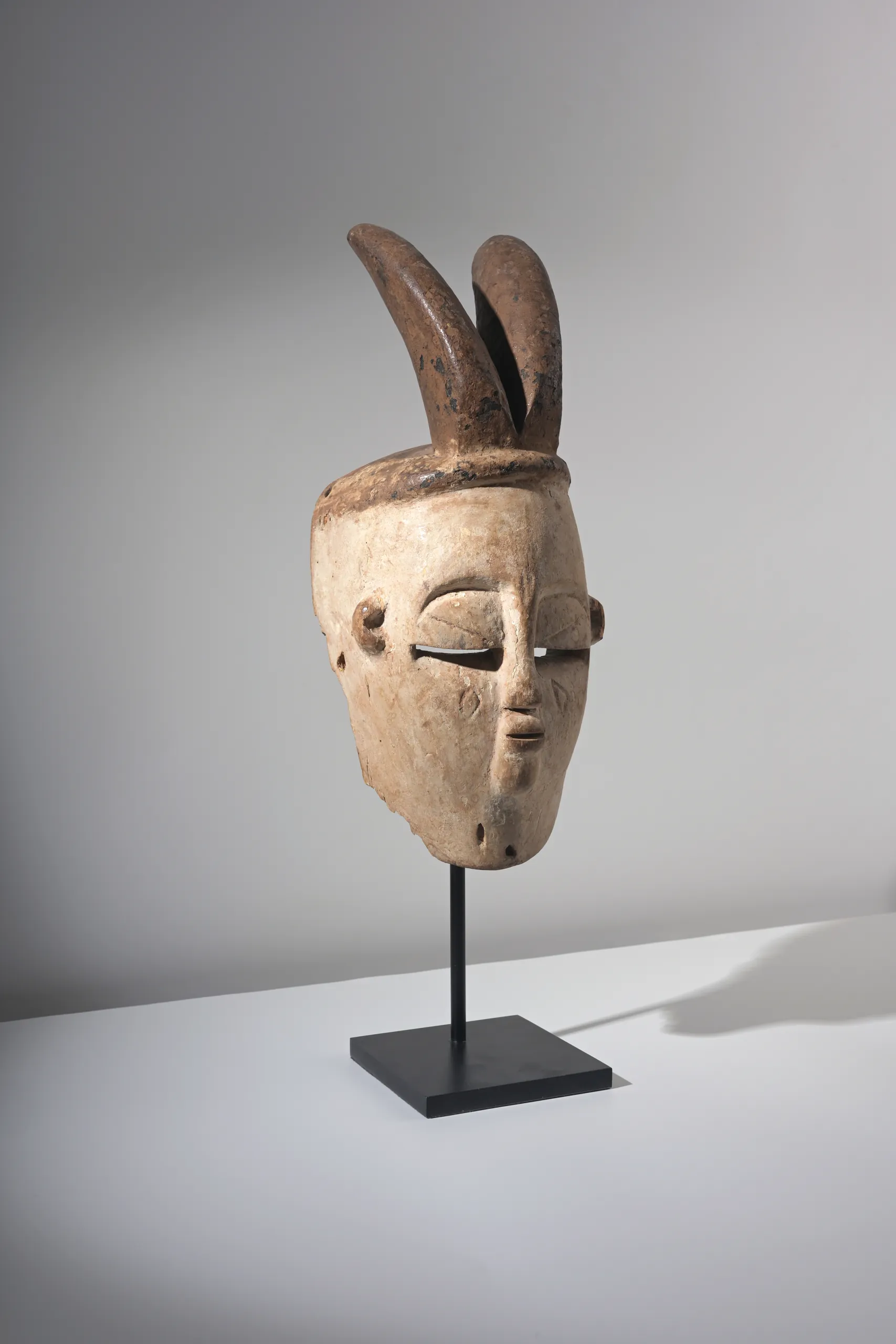
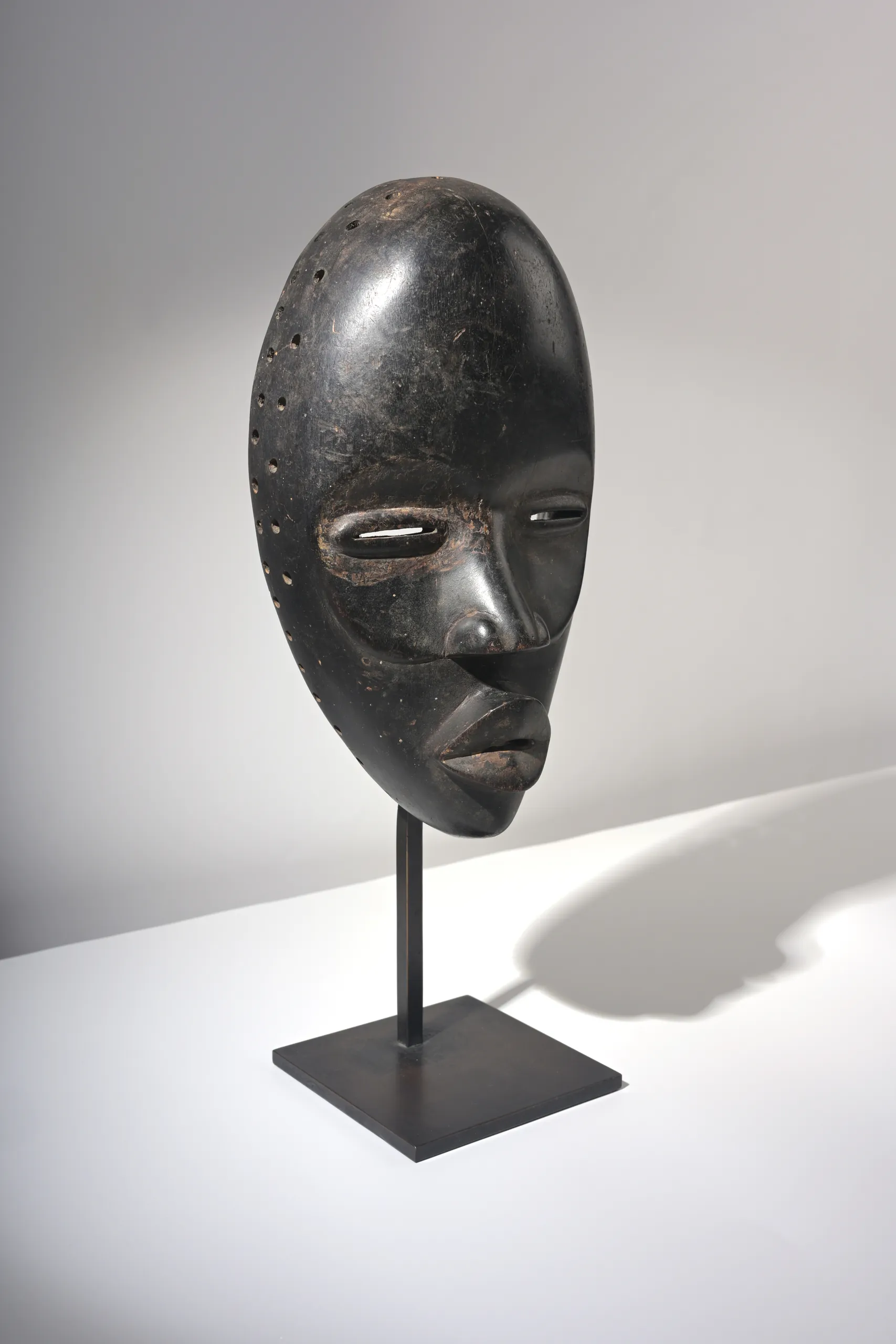
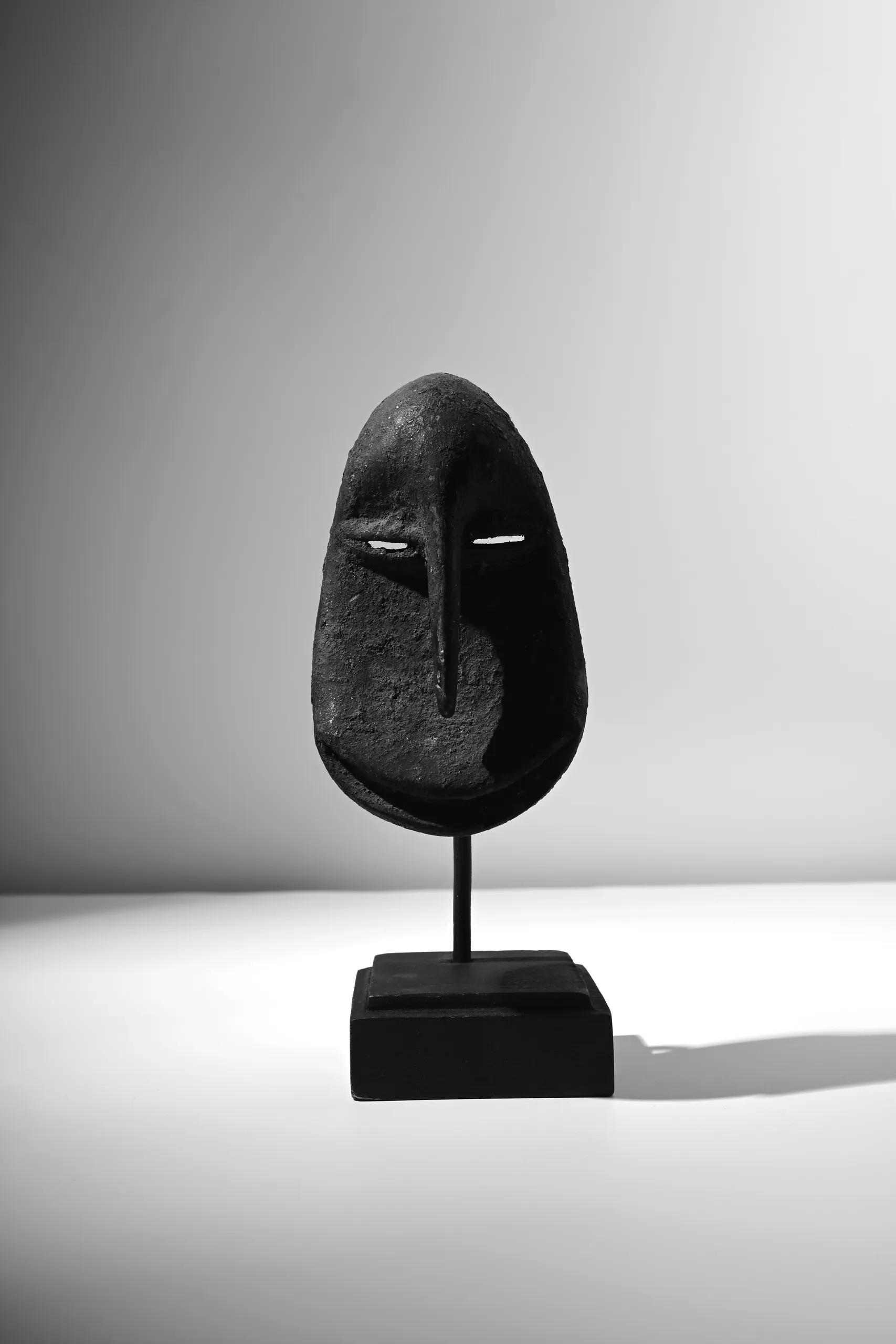
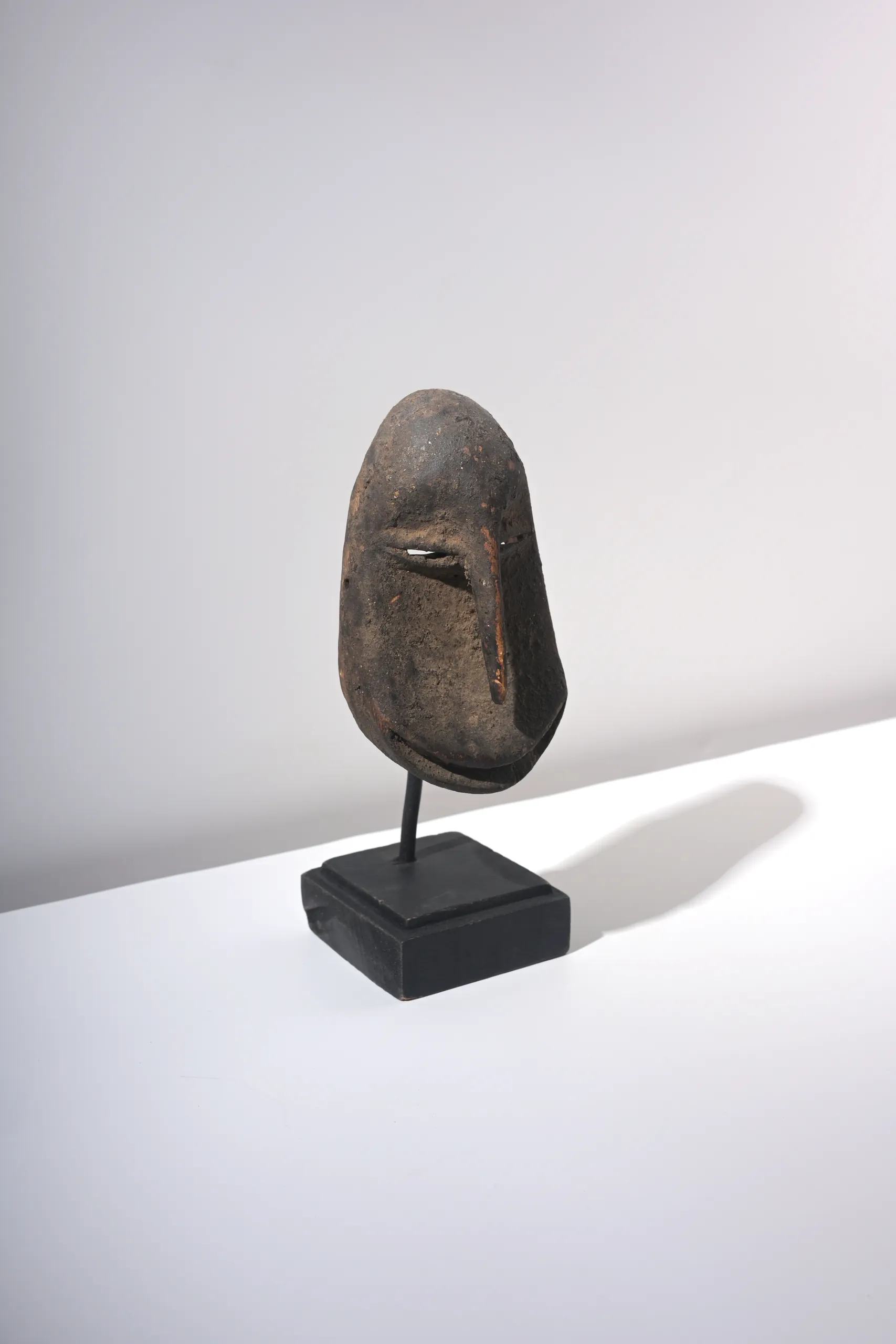
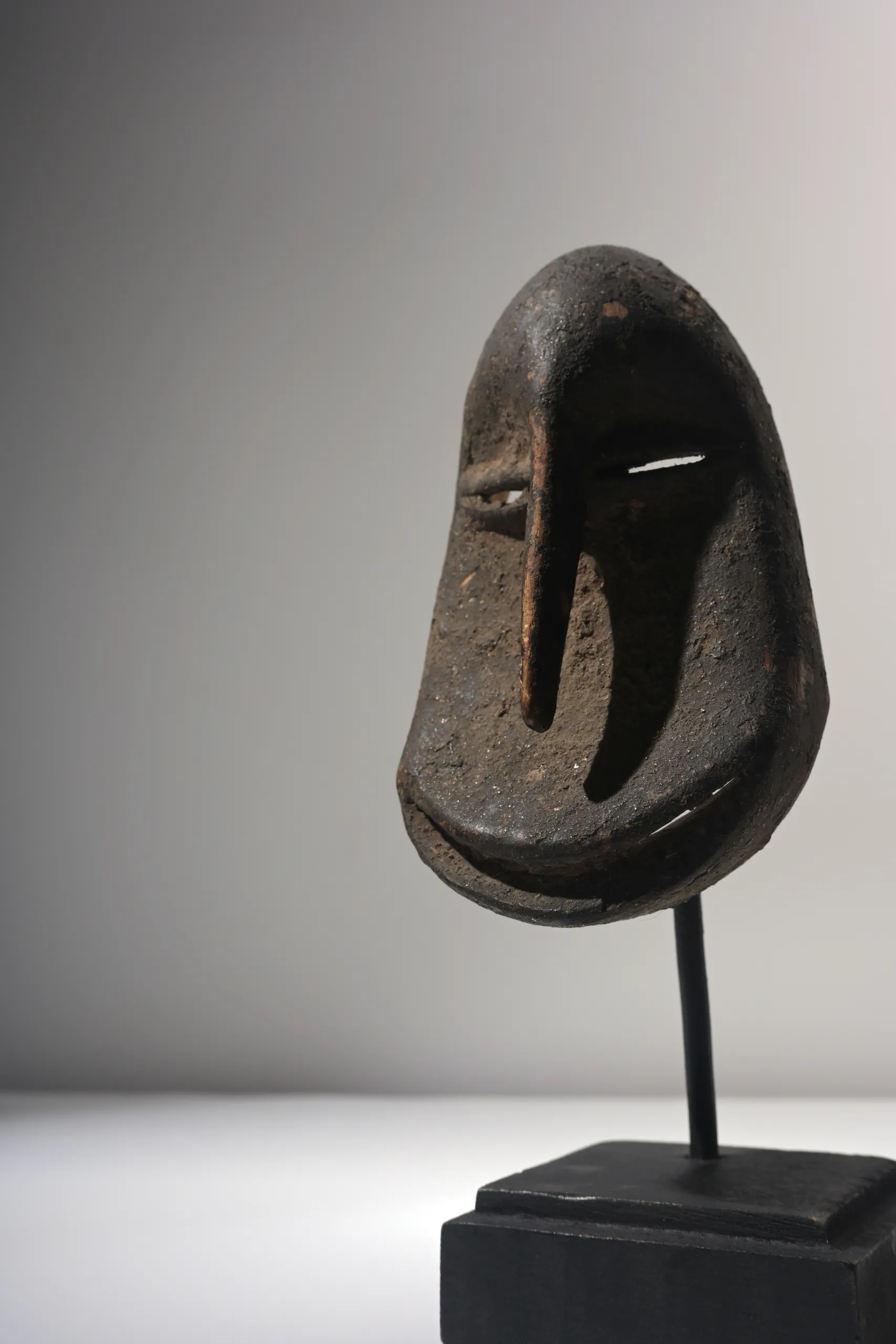
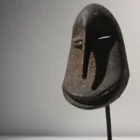
FR – Superbe masque zoomorphe Hemba, dit soko mutu (« l’homme-chimpanzé »), dont la présence sculpturale illustre avec une force saisissante la grande créativité de ce peuple. Taillé dans un bois léger, il déploie un modelé puissant et expressif : large mâchoire prognathe, arcades sourcilières fortement marquées et bouche entrouverte esquissent une expression à la fois menaçante et parodique. La patine sombre et finement craquelée témoigne d’un long usage rituel et de manipulations répétées.
Le soko mutu occupe une place centrale dans les cérémonies d’initiation et les danses des sociétés secrètes, en particulier au sein des confréries masculines. Représentant le chimpanzé, animal perçu comme le double ambigu de l’humain, ce masque incarne la force brute et la transgression des règles sociales, tout en rappelant la nécessaire domestication des instincts primaires. Par ses apparitions théâtrales, il met en garde les initiés contre les dangers de l’inhumanité, soulignant avec ironie la fragilité de l’équilibre entre nature et culture.
Datation
Première moitié du XXe siècle.
Provenance
Collection privée, Angers.
Collection Grimard, Nantes.
Condition
Belle patine croûteuse d’usage.
Dimensions
Hauteur : 15 cm (22,5 cm socle inclus).
EN – Superb Hemba zoomorphic mask, known as soko mutu (“chimpanzee-man”), whose sculptural presence powerfully illustrates the striking creativity of this people. Sculpted from a lightweight wood, it displays a forceful and expressive modeling: a broad prognathic jaw, prominent brow ridges, and a half-open mouth sketch an expression that is at once threatening and parodic. The dark, finely cracked patina bears witness to long ritual use and repeated handling.
The soko mutu holds a central place in the initiation ceremonies and dances of secret societies, particularly within male brotherhoods. Representing the chimpanzee, an animal perceived as the ambiguous double of man, this mask embodies brute force and the transgression of social rules, while simultaneously reminding the community of the necessary domestication of primal instincts. Through its theatrical appearances, it warns initiates against the dangers of inhumanity, ironically underscoring the fragile balance between nature and culture.
Date
First half of the 20th century.
Provenance
Private collection, Angers (France).
Grimard Collection, Nantes (France).
Condition
Beautiful crusty patina of use.
Dimensions
Height: 15 cm (22.5 cm base included).