
Description
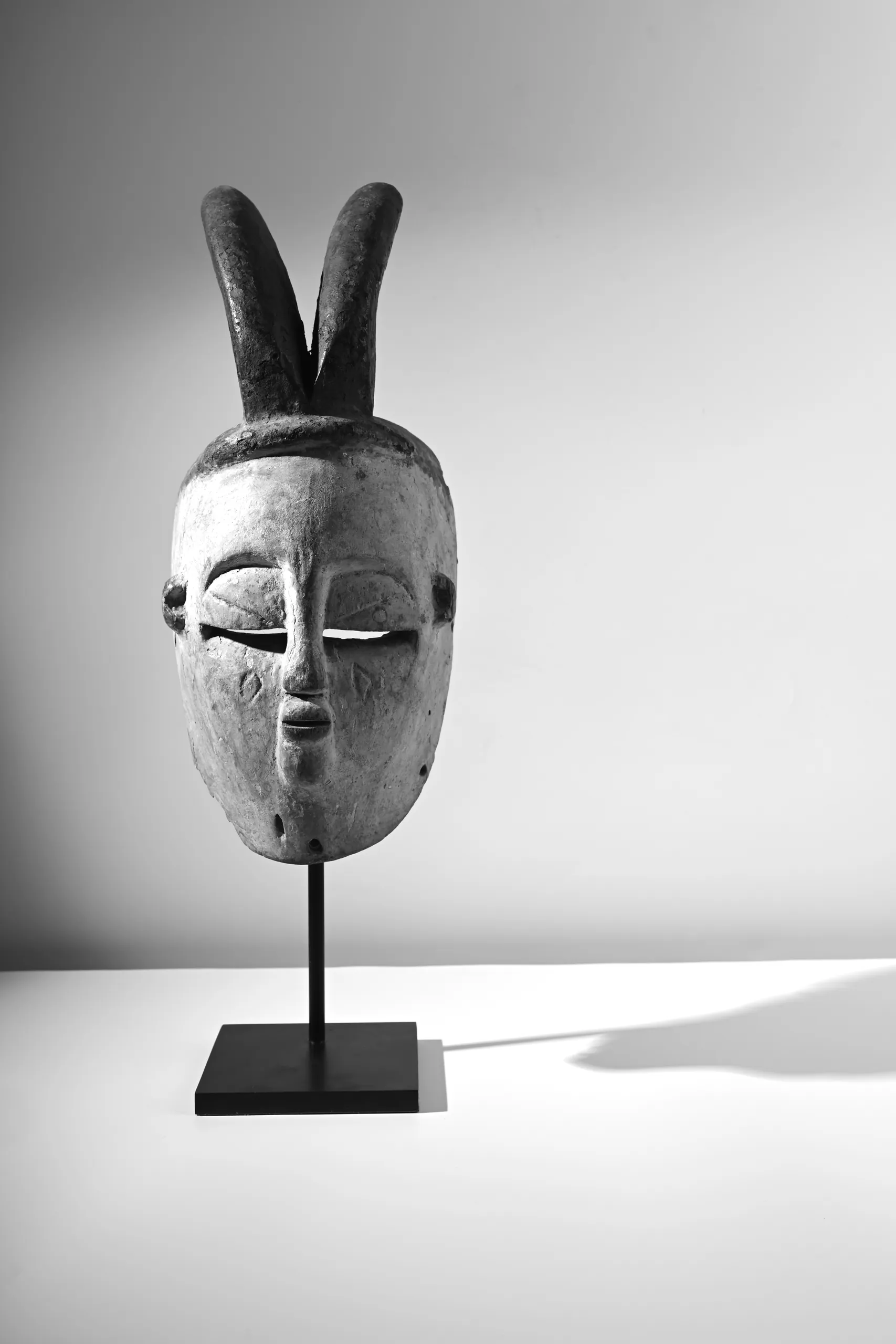
FR – Masque de la société Ekpo du peuple Bini, originaire de la région de l’ancien royaume de Bénin (actuel État d’Edo, sud du Nigeria).
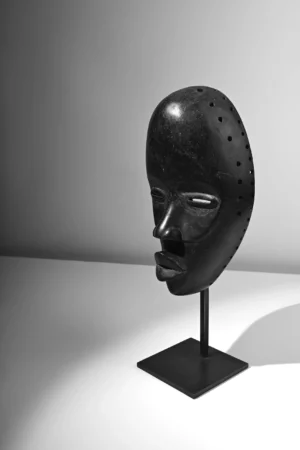
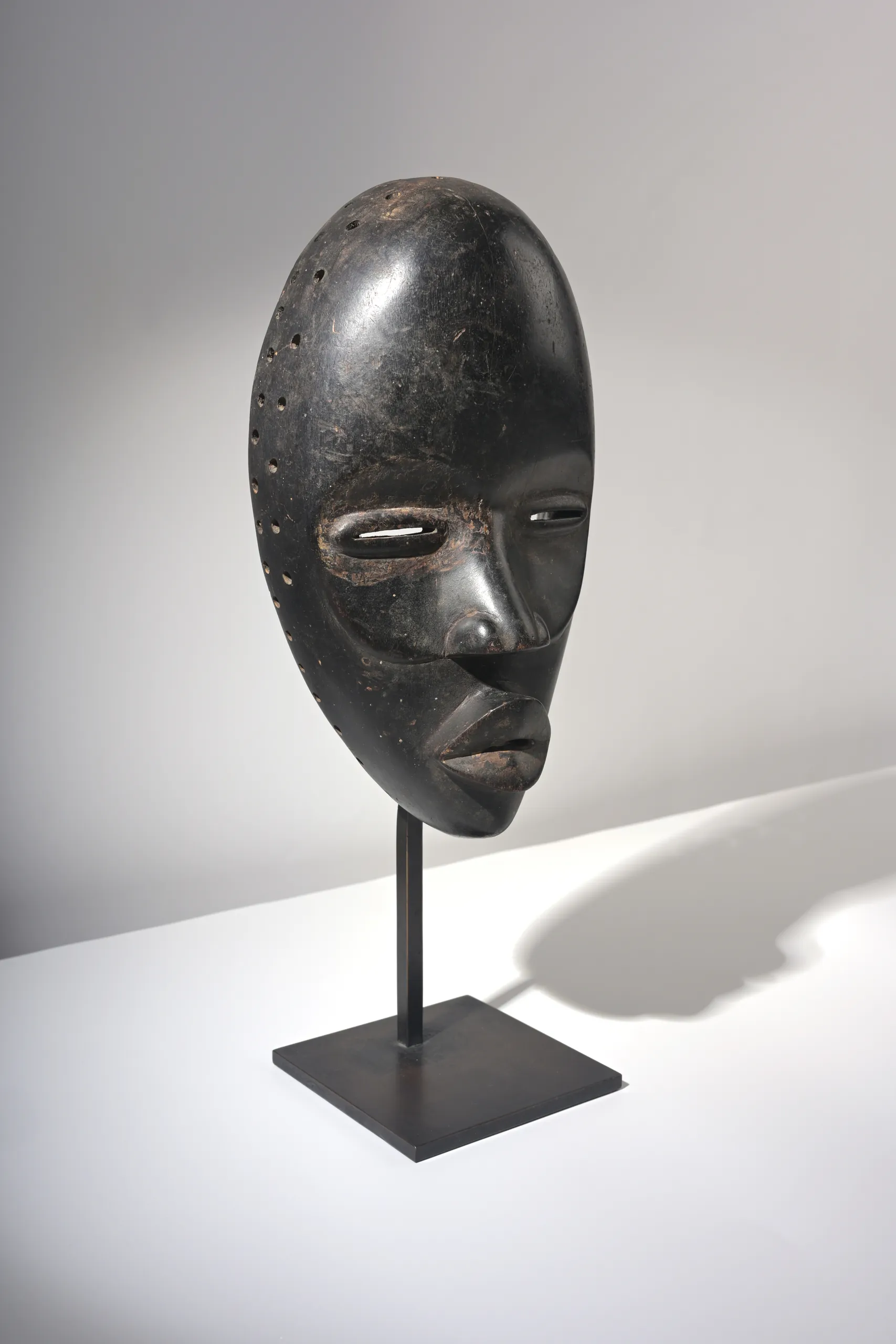
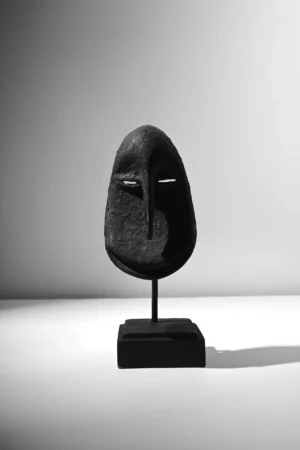
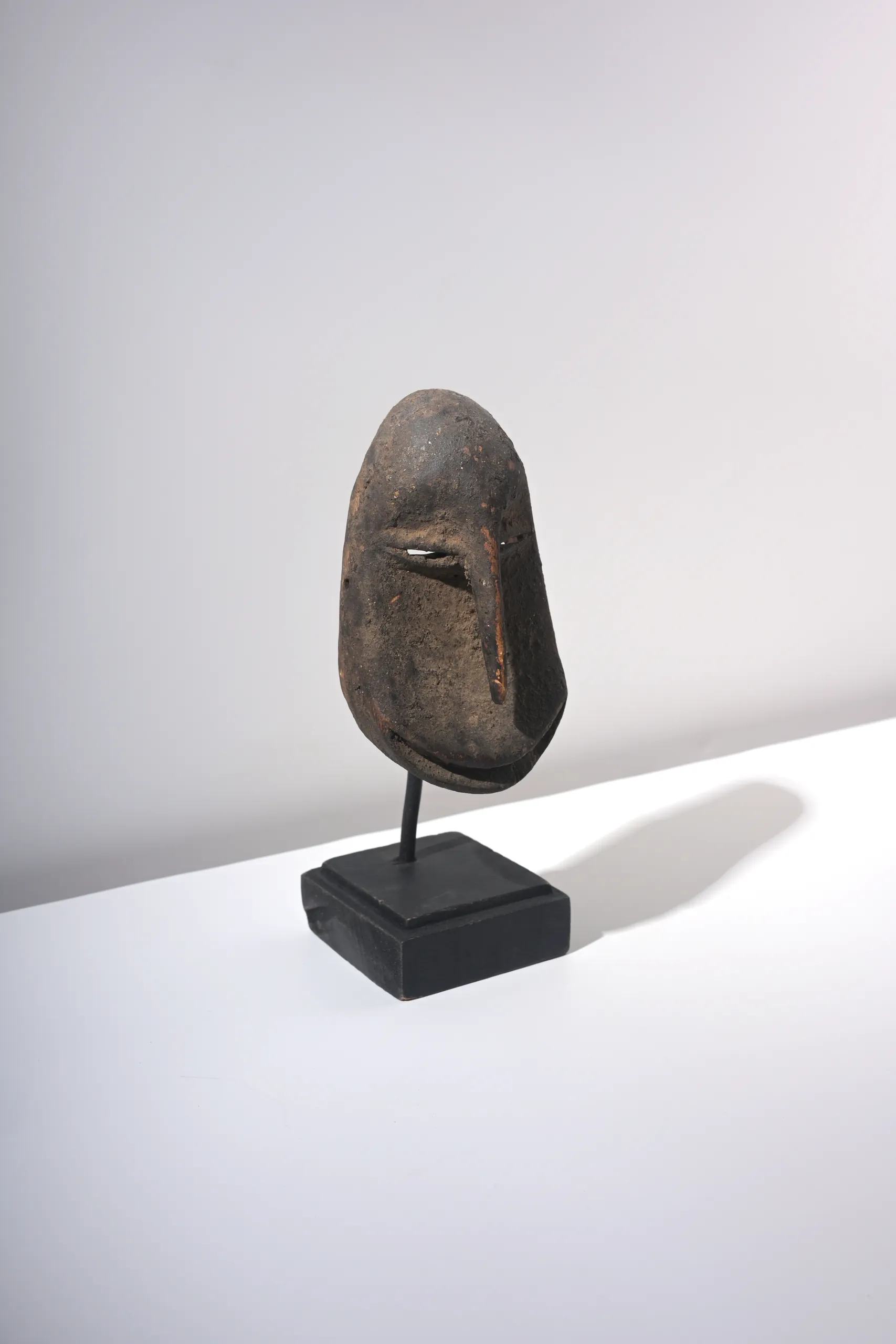
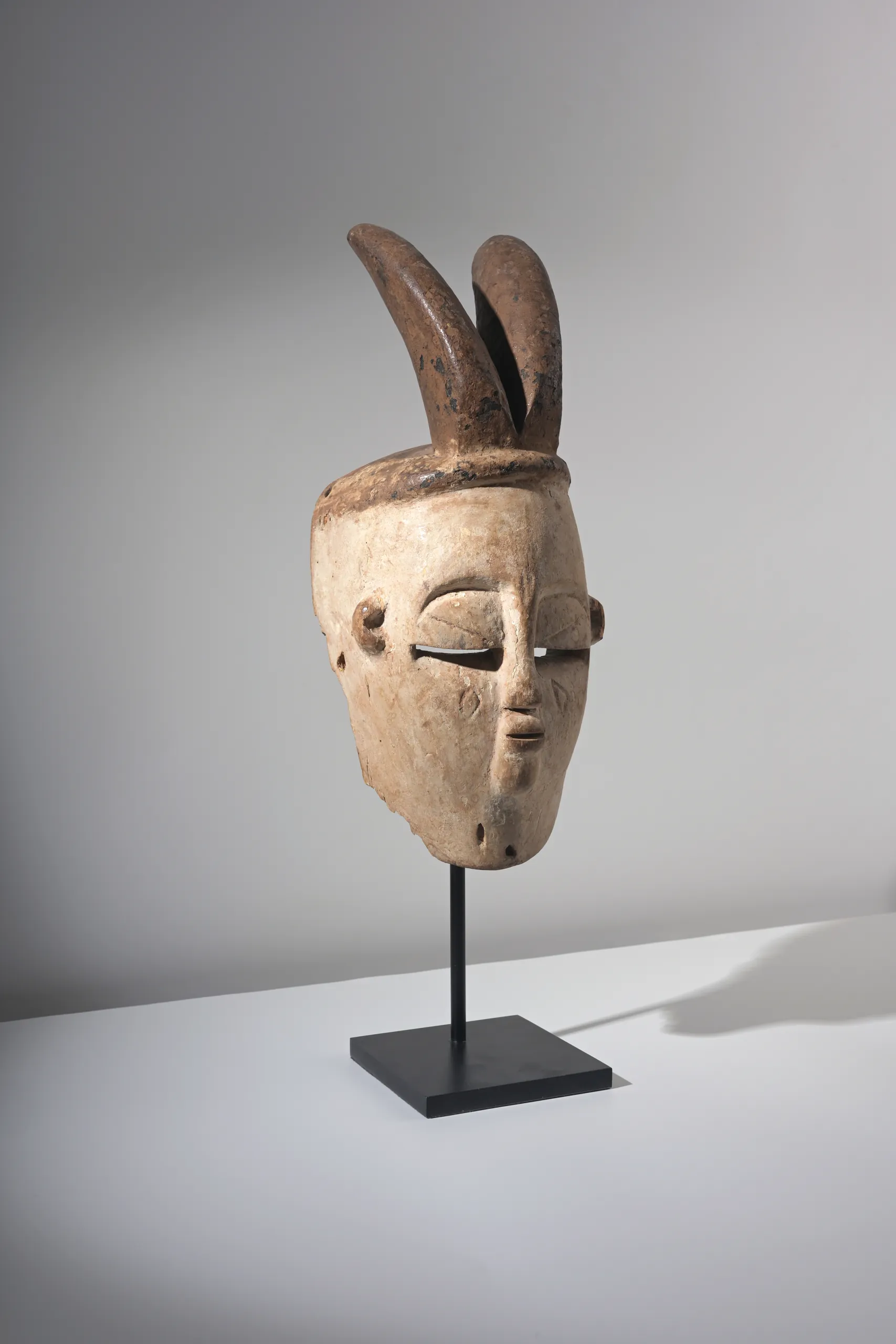
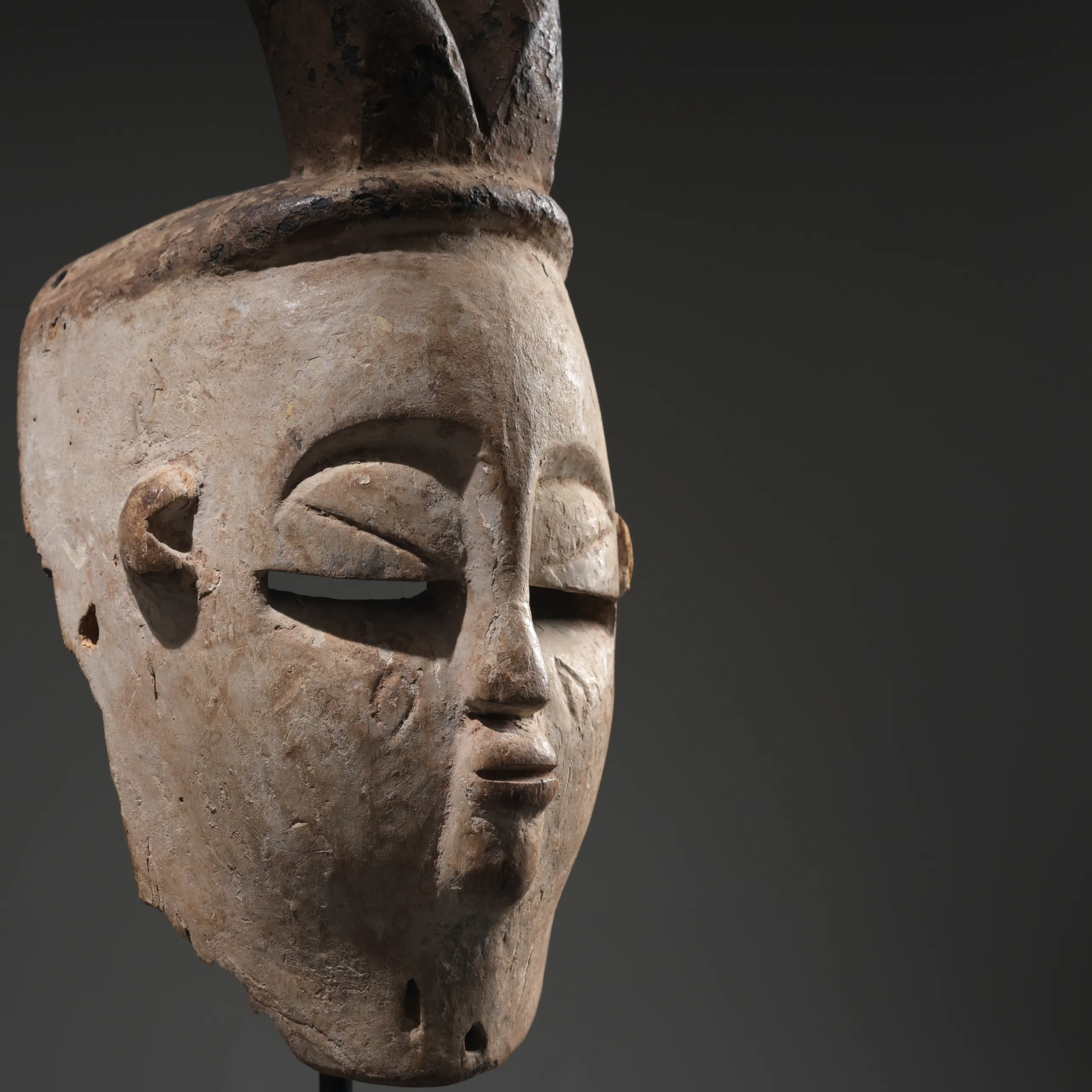
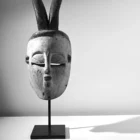
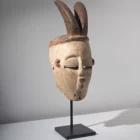
Cet élégant masque anthropo-zoomorphe représente une tête d’homme-antilope. Les paupières délicatement abaissées et le regard symboliquement tourné vers le sol confèrent à l’ensemble une expression profondément intériorisée et méditative. Le front dégagé est surmonté d’une coiffe en léger plateau soutenant deux cornes élancées, symboles de puissance et de connexion spirituelle.
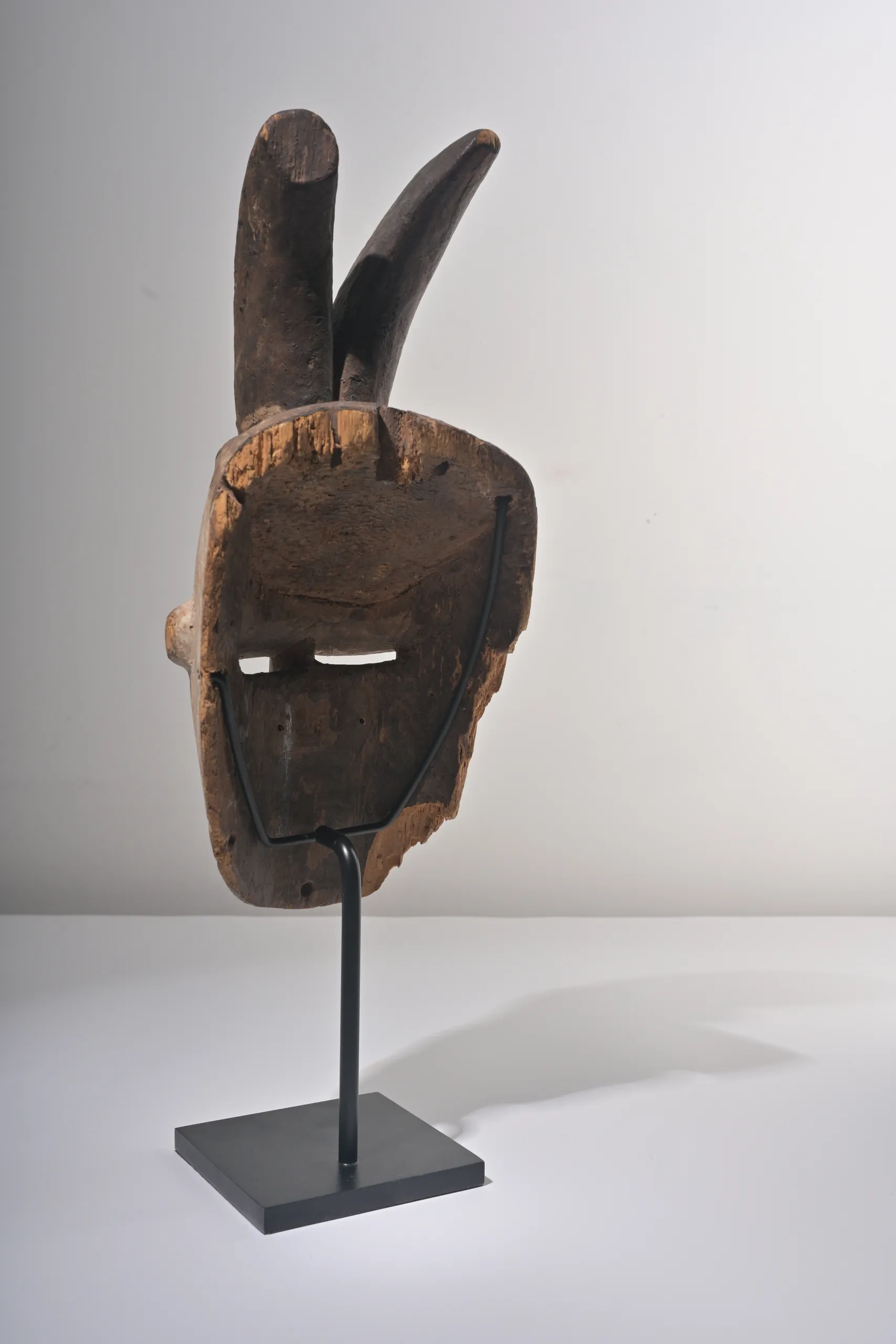
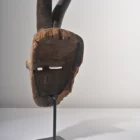
Sculpté dans une essence de bois tendre, l’œuvre conserve de superbes restes de kaolin sur une ancienne patine brune magnifiquement nuancée. Sa légèreté remarquable, associée aux intenses traces d’usure interne, constitue le signe indiscutable d’une grande ancienneté et d’un usage rituel prolongé. Porté lors des danses de la société Ekpo, ce masque associait traits humains et symboles animaux afin d’invoquer les esprits protecteurs, de réguler la justice et de renforcer l’autorité morale du groupe.
Un exemplaire stylistiquement très proche, publié dans la littérature consacrée aux arts du Nigeria méridional, est aujourd’hui conservé au Dallas Museum of Art, confirmant la qualité muséale et la rareté de la présente œuvre.
Datation
Fin du XIXe – début du XXe siècle.
Provenance
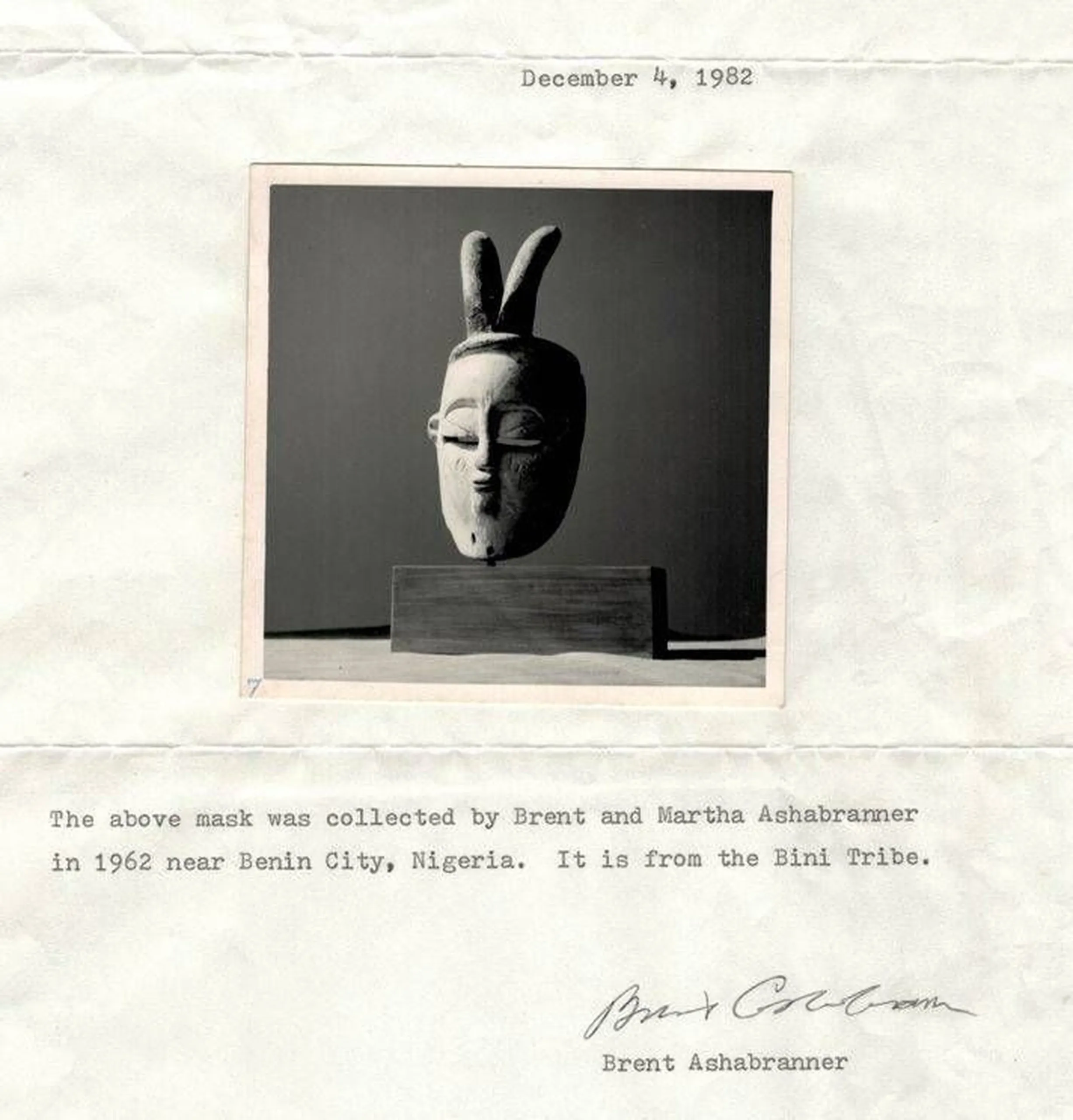
Collecté in situ en 1962.
Collection Brent & Martha Ashabranner, Washington D.C., 1982 (une copie du certificat d’origine sera remise à l’acquéreur).
Collection privée belge.
Bibliographie
LUNSFORD, John (dir.). African Art From Dallas Collections. Catalogue d’exposition (Dallas Museum of Fine Arts, 26 juillet – 4 septembre 1972). Dallas : Dallas Museum of Fine Arts, 1972, p. 59.
Condition
Légers manques liés à l’âge et à l’usage.
Dimensions
Hauteur : 33 cm (43 cm socle inclus).
EN – An Ekpo society mask from the Bini people, originating from the region of the former Kingdom of Benin (present-day Edo State, southern Nigeria).
This elegant anthropo-zoomorphic mask represents a human-antelope head. The delicately lowered eyelids and the gaze symbolically directed toward the ground endow the piece with a profoundly internalized and meditative expression. The clear forehead is surmounted by a slightly flattened headdress supporting two slender horns, symbols of power and spiritual connection.
Carved from a soft wood, the work retains superb traces of kaolin over a beautifully nuanced, ancient brown patina. Its remarkable lightness, combined with intense traces of internal wear, is an indisputable sign of great age and prolonged ritual use. Worn during the dances of the Ekpo society, this mask combined human features and animal symbols to invoke protective spirits, regulate justice, and strengthen the moral authority of the group.
A stylistically very similar example, published in the literature dedicated to the arts of southern Nigeria, is currently held at the Dallas Museum of Art, confirming the museum quality and rarity of the present work.
Date
Late 19th – early 20th century.
Provenance
Collected in situ in 1962.
Brent & Martha Ashabranner Collection, Washington D.C., 1982 (a copy of the original certificate will be provided to the purchaser).
Belgian private collection.
Literature
LUNSFORD, John (dir.). African Art From Dallas Collections. Exhibition catalogue (Dallas Museum of Fine Arts, July 26 – September 4, 1972). Dallas: Dallas Museum of Fine Arts, 1972, p. 59.
Condition
Minor losses consistent with age and use.
Dimensions
Height: 33 cm (43 cm base included).