
Description
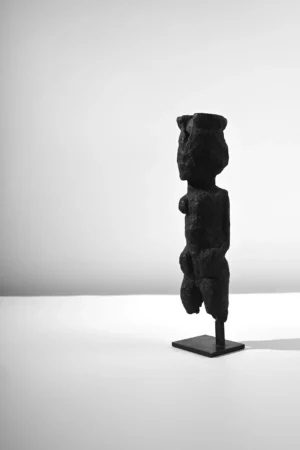
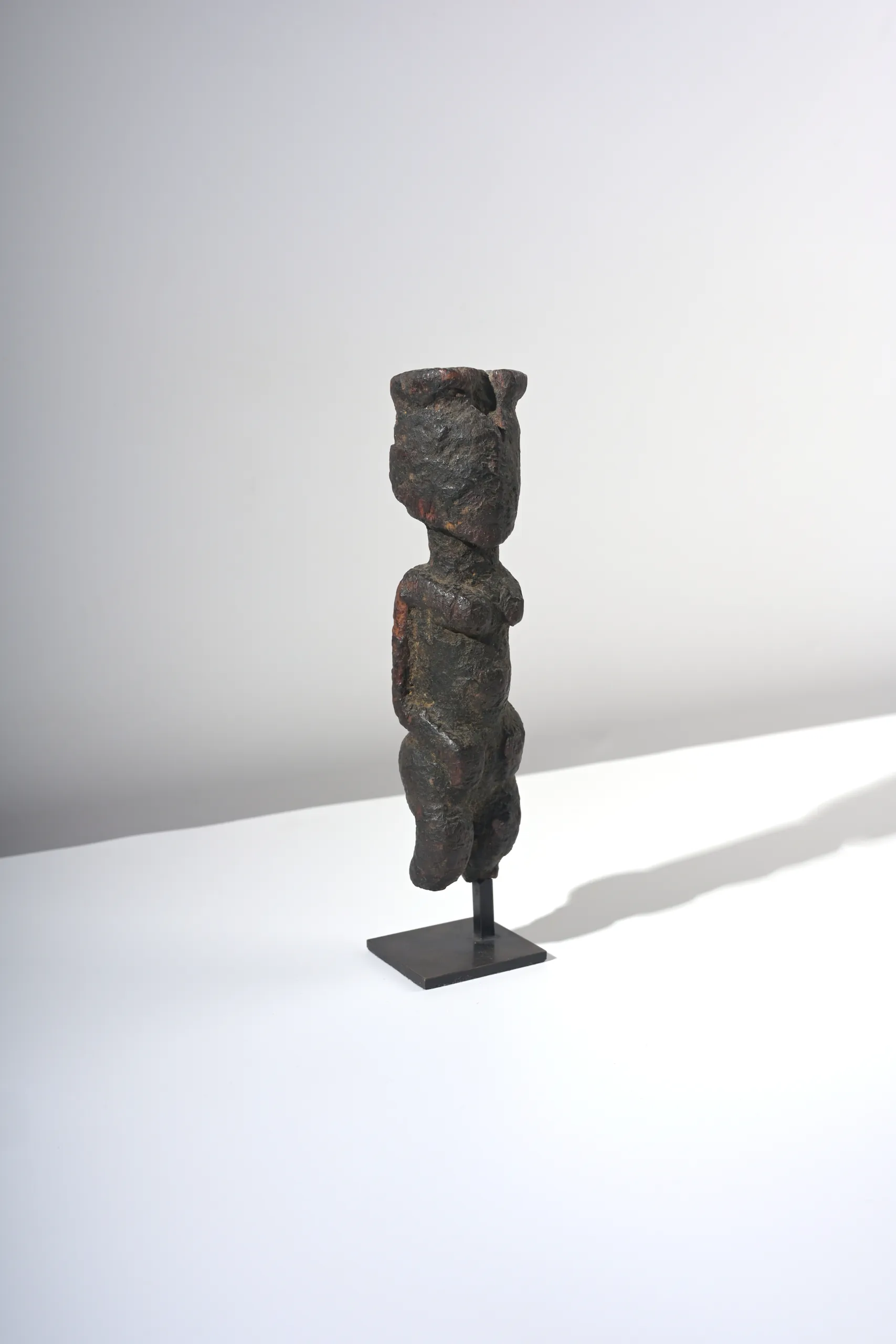
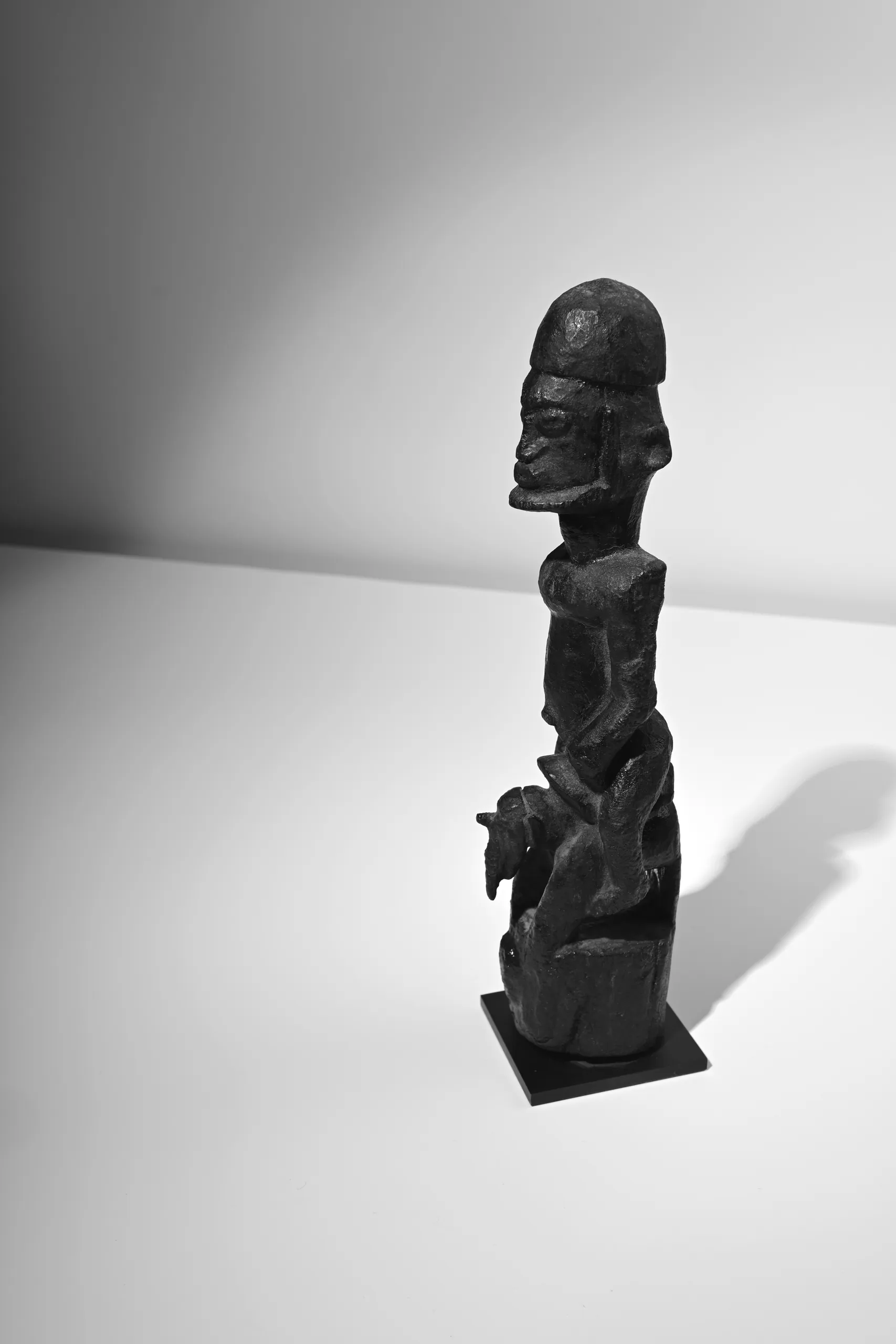
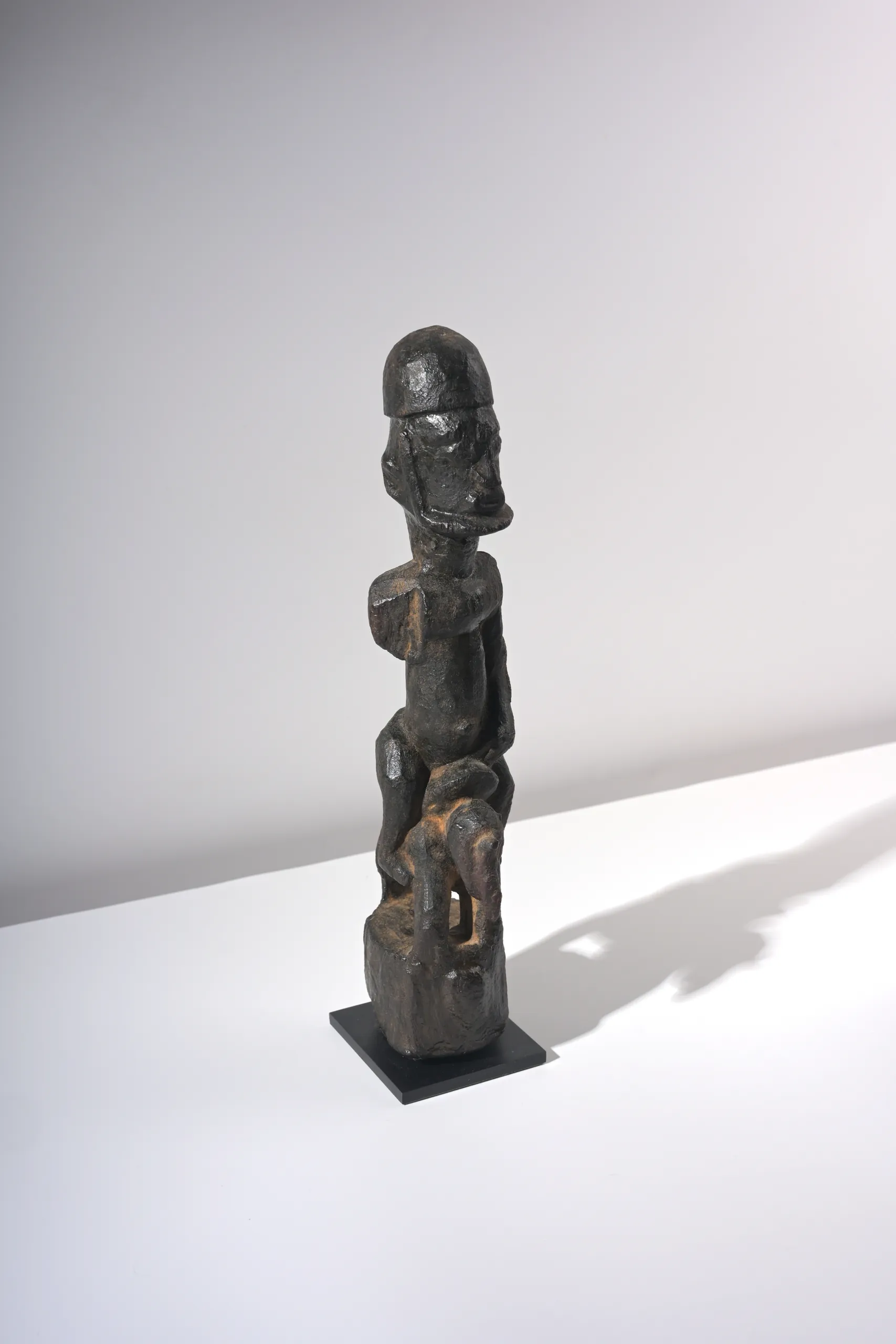
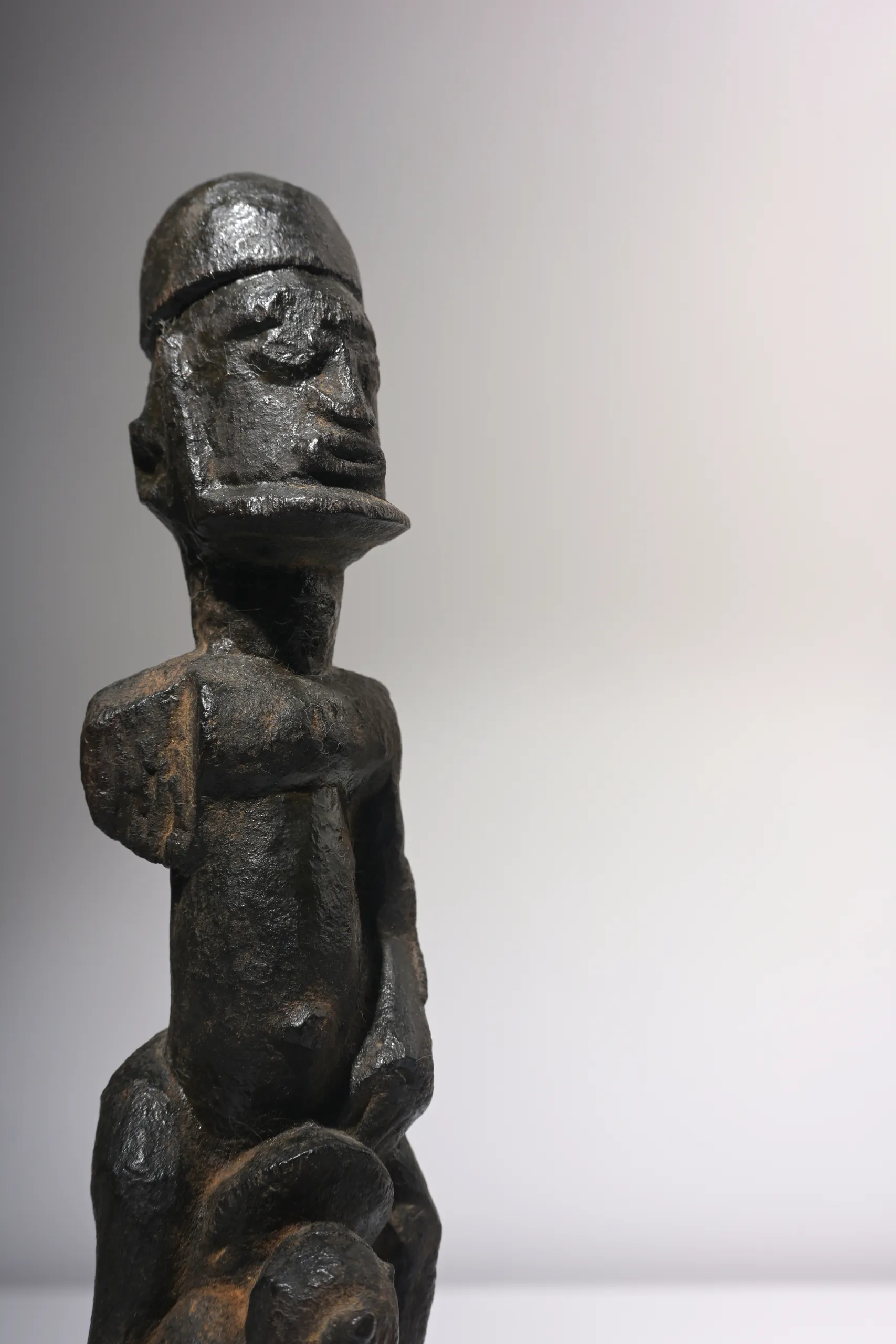
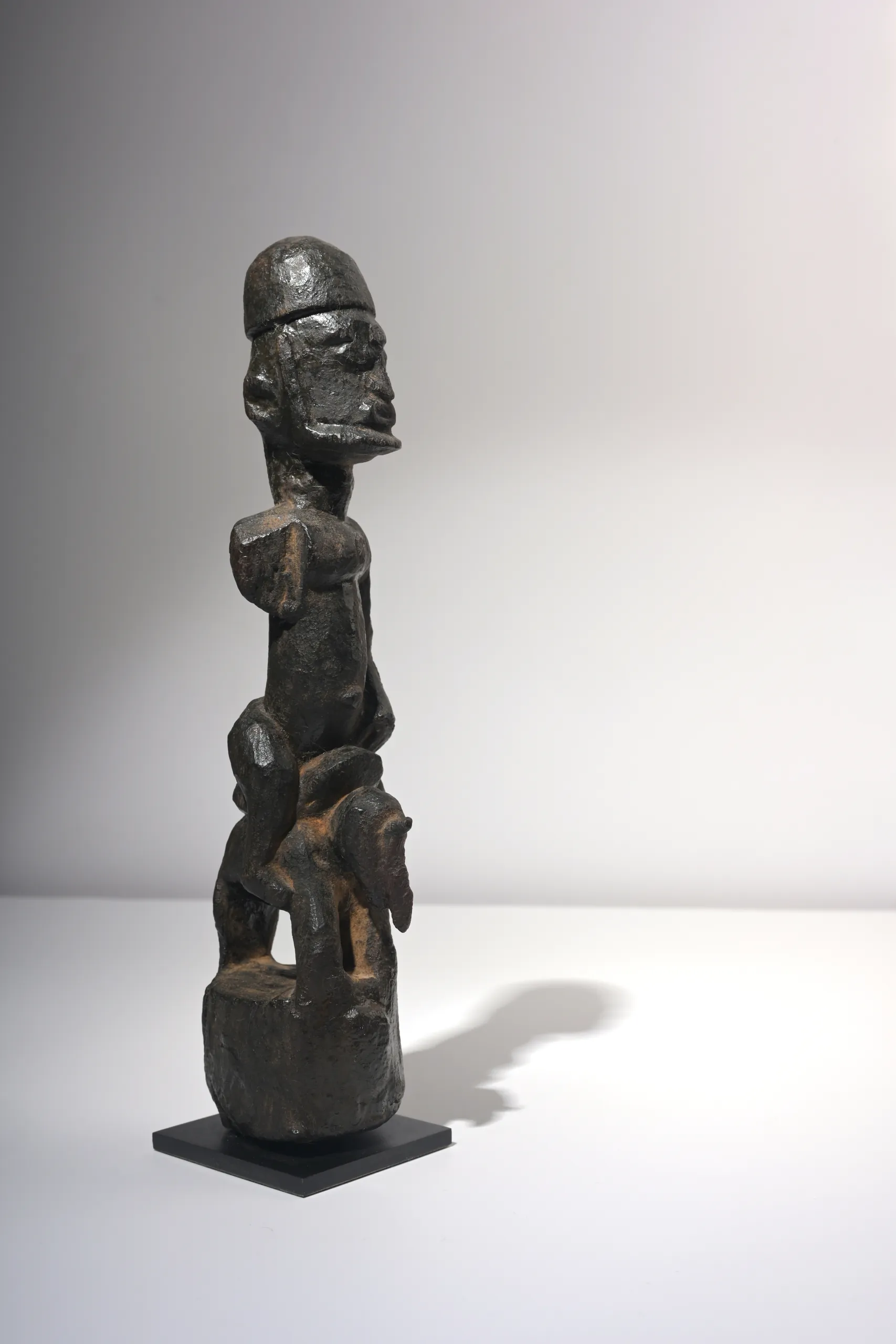
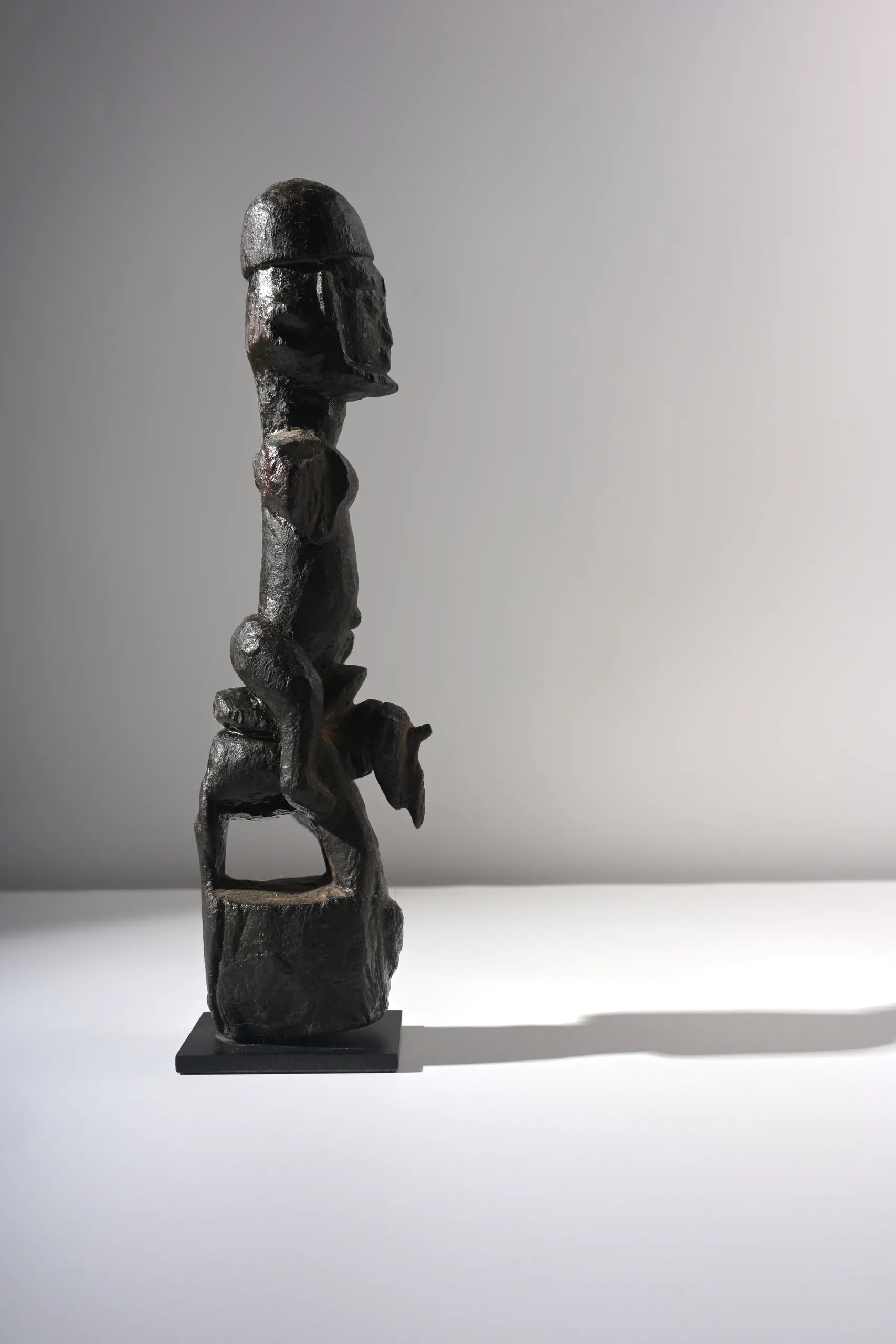
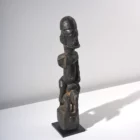
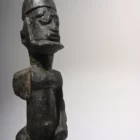
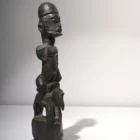
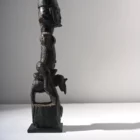
FR – D’une saisissante économie de moyens, ce rare cavalier Dogon concentre toute la force de la sculpture ancienne du Mali. Réduite à l’essentiel, la composition associe la verticalité hiératique du personnage à la présence compacte de sa monture, dans un équilibre intense et mystique. La tête cylindrique, le visage sobrement construit et les volumes puissamment condensés confèrent à l’ensemble une monumentalité qui dépasse largement ses dimensions réelles.
La patine noire, profonde et lustrée, accumulée au fil des libations et des manipulations rituelles, enveloppe la sculpture d’une présence presque tellurique. Malgré la perte ancienne du bras droit, la figure conserve toute sa cohérence formelle et sa puissance évocatrice.
Cette œuvre provient de la collection de Christian Mattler, architecte de formation ayant participé à la construction de la tour Montparnasse et collaboré étroitement avec Jean Prouvé. Homme de création et de modernité, Mattler a rassemblé tout au long de sa vie un ensemble d’œuvres choisies avec la même exigence formelle qui guidait son regard d’architecte, faisant de sa collection un véritable manifeste esthétique. L’œuvre fut très probablement acquise par ses soins auprès de Jean-Michel Huguenin, figure marquante du marché des arts d’Afrique à Saint-Germain-des-Prés.
Datation
Fin du XIXe – début du XXe siècle.
Provenance
Galerie Jean-Michel Huguenin, Paris (probablement).
Collection Christian Mattler, Paris.
Bibliographie
Pour une mise en perspective stylistique :
LELOUP, Hélène. Dogon. Paris : Musée du quai Branly – Jacques Chirac / Somogy, 2011. (Le traitement formel et la nature de la patine de notre pièce rappellent étroitement le cavalier N’duleri reproduit p. 220, ainsi que le cavalier du Mandé illustré p. 248).
Condition
Superbe patine rituelle suintante, manque ancien au bras droit.
Dimensions
Hauteur : 27 cm (socle inclus).
EN – With a striking economy of means, this rare Dogon equestrian figure concentrates all the power of ancient Malian sculpture. Reduced to its essence, the composition combines the hieratic verticality of the rider with the compact presence of his mount in an intense and mystical balance. The cylindrical head, the soberly constructed face, and the powerfully condensed volumes endow the whole with a monumentality that far exceeds its actual dimensions.
The deep, lustrous black patina, built up through ritual libations and handling, envelops the sculpture in an almost telluric presence. Despite the old loss of the right arm, the figure retains all its formal coherence and evocative power.
This work comes from the collection of Christian Mattler, an architect who participated in the construction of the Tour Montparnasse and collaborated closely with Jean Prouvé. A man of creation and modernity, Mattler assembled throughout his life a body of works chosen with the same formal rigor that guided his architectural vision, making his collection a true aesthetic manifesto. The piece was very likely acquired by him from Jean-Michel Huguenin, a prominent figure in the African art market in Saint-Germain-des-Prés.
Date
Late 19th – early 20th century.
Provenance
Jean-Michel Huguenin Gallery, Paris (probably).
Christian Mattler Collection, Paris.
Literature
For a stylistic perspective:
LELOUP, Hélène. Dogon. Paris: Musée du quai Branly – Jacques Chirac / Somogy, 2011. (The formal treatment and the nature of the patina of our piece closely recall the N’duleri equestrian figure reproduced on p. 220, as well as the Mandé equestrian figure illustrated on p. 248).
Condition
Superb resinous sacrificial patina, old loss to the right arm.
Dimensions
Height: 27 cm (base included).